Ooh, Halloween - I still get excited even as an adult! And it's not just for us big kids(!) - our little ones love dressing up looking terrifying and eating loads of yummy sweets, as well as picking and decorating pumpkins! But whilst it's lots of fun, there is also potential for danger – and we’re not talking bumping into Frankenstein or falling foul of a witch's spell! So as a parent, what should you be alert for on Halloween? Here’s our handy guide...
Halloween safety for children: Choking, allergies & more
Choking hazards: sweets that deserve a second look
Lots of sweets are unfortunately choking hazards, with round/oval hard boiled sweets being the worst. Check what sweets are being handed out and siphon off those that don’t feel safe – small hard candies (including mini eggs), gum, or items with small parts like gummy eyeballs should be avoided. Don't forget that lollipops come into this category - if they come loose from the stick, they are a round, hard choking hazard. If your child is older and out with friends, ask them to leave any boiled sweets until they are at home – running around excitedly with friends is really not a sensible time to be consuming these. Keep an eye out for age-appropriate treats and always supervise your child while they enjoy their sweets.
Marshmallows, especially the mini ones are definitely ones to avoid. They can pose a choking risk because of their size and sticky texture, so young children need particular care with these foods.
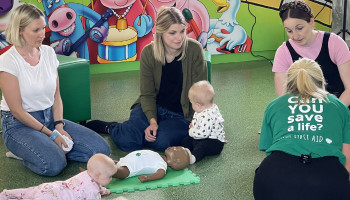
If you are concerned you would not know what to do in a choking incident, watch the video below and sign up to one of our Mini First Aid classes today.

Lurking allergies
It’s really hard when trick or treating in the dark to see the ingredients on a random product handed out by a stranger, so it’s not surprising that cases of allergic reactions can peak at Halloween.
The Anaphylaxis Campaign recommends the following to parents of allergy sufferers:
- Remind your child what their food allergens look like, and which products they need to be careful with
- Ask your child not to eat any treats until you have checked them, or for older children, ask that they bring their treats home. Have other safe treats available at home so you can do swaps for the unsuitable treats
- Be aware that “treat size” versions of popular brands can contain different ingredients, so make sure you check ingredients lists
- Keep adrenaline auto-injectors on you at all times, even if this means tucking it into their costume or putting in their goodie collection pot
- Brief adults and children who are with your child – what are they allergic to, what are the signs and symptoms to look out for – and teach them how to administer emergency medication if possible
Anaphylaxis UK has specific advice for making Halloween safer for children with food allergies.
Don’t forget that some children may also have an allergic reaction to face paints and / or fake blood used as part of their costume.
 Foul flames
It’s obvious, but the safest thing is to not use real flame candles in your pumpkins. You may want to switch to LED / flameless battery-powered candles to reduce the fire risk. But, be sure the battery compartment is secure. Many LED lights, and the remote controls for them, contain button batteries which can badly hurt or kill a small child if they swallow one and it gets stuck.
Whilst you might use battery operated LED candles yourself, this doesn’t mean other people will – the amount of doorsteps I have seen over the years laden with lit pumpkins is unbelievable. The risk of kids' costumes trailing innocently into a lit pumpkin decoration is truly terrifying. So, make sure you warn your children to be wary about pumpkins either on the ground or being carried as they may have a lit flame in them, and supervise children, especially when approaching decorated doorsteps.
If you have candles lit in your home, remember the following safety advice:
- Never leave candles or a fire unattended
- Put candles on a heat resistant surface
- Supervise children and pets around lit candles
- Always extinguish a candle completely after use
Creepy costumes
No halloween costume is completely safe, because all fabrics will burn on contact with a naked flame, but there are steps you can take to make sure your child’s costume is as safe as it can be. Take a look at this great poster from Child Accident Prevention Trust:

You also need to be careful when buying online. Always read product reviews and check for any product recalls. The Trading Standards website is a good place to look.
In addition to the above precautions, there is one more thing you can look out for - companies may also choose to label garments with the additional statement, "This garment has undergone additional safety testing for flammability" if they have passed the additional testing requirements of the British Retail Consortium Code of Practice. This means that if a dress-up costume catches light it may still burn, but the speed at which the flame spreads is slower. Costumes not tested to the same flammability standards may ignite more easily and burn quicker.
 It sounds obvious but if you can, avoid any costumes with trailing fabrics, as these are much more likely to accidentally catch on fire. And as an extra safety precaution, make sure your child wears long layers on both top and bottom half underneath their costume, as this will give their skin an extra layer of protection should the worst happen and their costume catch alight.
Visibility matters all year round, but once the clocks go back it gets dark so much earlier! By Halloween, it’s already dusk around 5pm – right when little ones are out trick or treating. Add some reflective tape to costumes or bags to help drivers spot them in the dark, or try fun glow sticks and glow jewellery for extra sparkle and safety. Heading out earlier? Bright or fluorescent clothing helps your little monsters stand out in the daylight too.
Perilous pumpkins
Let’s be honest, carving a pumpkin (or a rock hard swede as it was in my day!) is not the most sensible idea! When it comes to cool and quirky Halloween decorations, pumpkin carving isn’t the only way to go.
 Above all, we hope you and your families have a really fun filled Halloween – don’t get spooked out there folks!
Charlotte and the Mini First Aid Team xx
Sources: Anaphylaxis UK, Child Accident Prevention Trust
Our Choking Prevention Bundle

Help prevent choking at home with this brilliant safety bundle! We’ve put together some of our favourite tools to help keep little ones safe at mealtimes. This choking prevention bundle includes:
- A grape cutter - quickly quarter grapes into safe size - also great for cherry tomatoes and blueberries
- A choke tester - a simple prevention aid to check if everyday objects pose a choking risk. If it fits in the tester, it’s a no-go
- Sit, Chop, Chew book - a fun, family-friendly read that teaches children how to eat safely
- A choking first aid fridge magnet - easy-to-follow steps to help you act fast in an emergency.
Peace of mind for parents, safety for little ones.
Buy your bundle here
Book a class with Mini First Aid
Knowing what to look out for can make all the difference. At Mini First Aid, we cover meningitis awareness in our award-winning Baby & Child First Aid classes, helping parents and carers understand the signs and symptoms and feel more confident knowing when to seek medical help.
Our friendly, practical classes cover a range of essential first aid topics, including CPR, choking, burns and febrile seizures, giving you the knowledge and confidence to act when it matters most.
Classes are available at public venues or as private home sessions, and pre-crawling little ones are welcome too!
Visit Mini First Aid Classes to find out more.